Cold-induced anaphylaxis / cold urticaria
Urticaria · Allergy / Immunology
Physician-written · Verified by three sets of doctors · Reviewed November 2026
Bedside summary
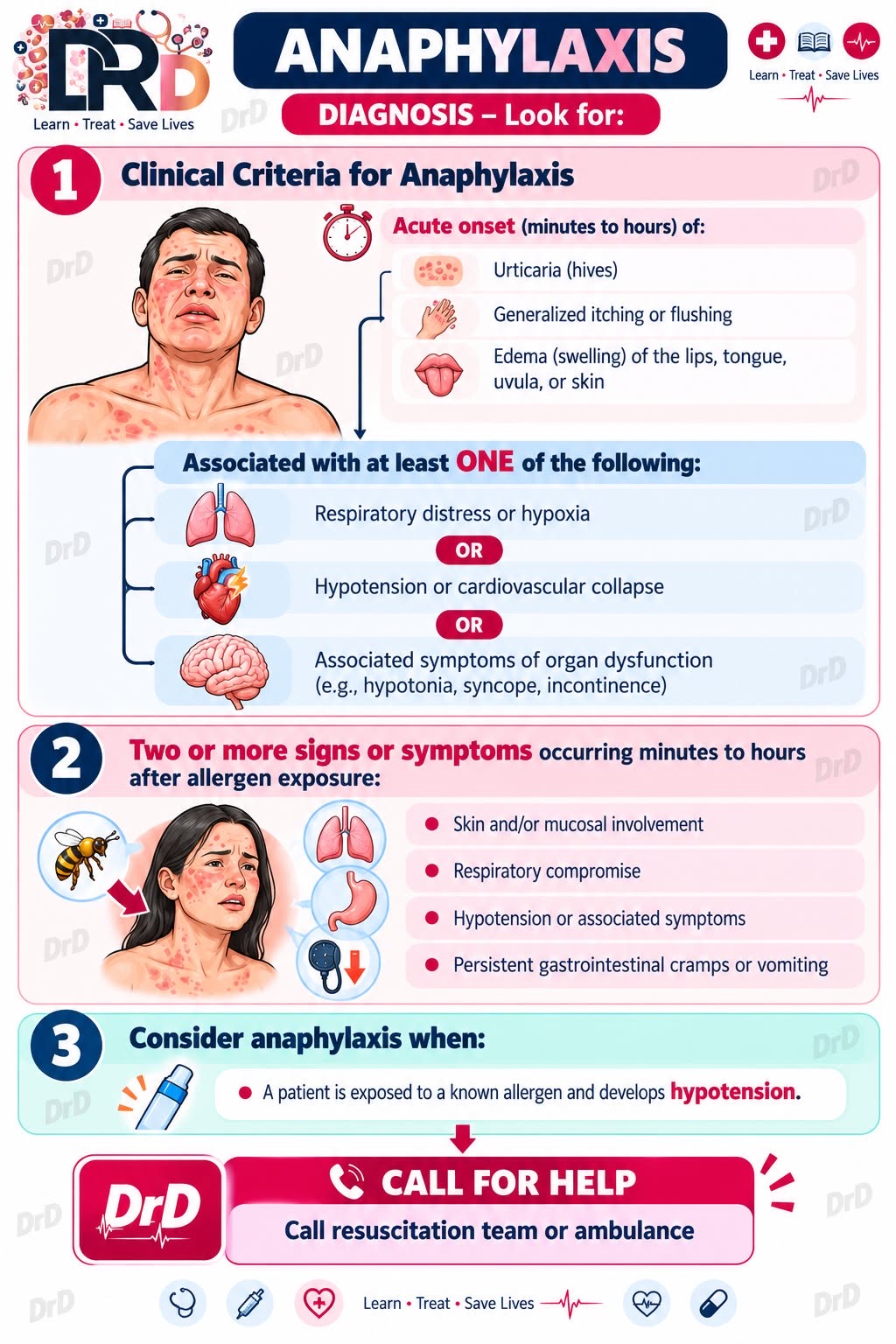
A physical urticaria in which cold exposure triggers urticaria/angioedema and, with large-surface cold exposure (e.g. swimming), systemic anaphylaxis with hypotension and collapse.
Figures & algorithms
Red flags
- Whole-body cold exposure (swimming) with collapse
- Airway/tongue swelling
- Hypotension
- Reaction to cold drinks/food with oropharyngeal swelling
Assessment
Differential diagnosis
- Cholinergic urticaria
- Idiopathic anaphylaxis
- Exercise-induced anaphylaxis
- Cryoglobulinaemia-associated urticaria
- Aquagenic urticaria
Investigations
- Cold stimulation (ice-cube) test
- Clinical history linking cold exposure to symptoms
- Consider cryoglobulins/cold agglutinins if secondary cause suspected
- Tryptase if anaphylaxis
Management
- For systemic reactions, treat as anaphylaxis with IM adrenaline, oxygen and fluids
- Remove the cold stimulus and rewarm gradually
- Give a non-sedating antihistamine (often at higher than standard doses) for urticaria
- Educate on strict avoidance of large-surface cold exposure (especially cold-water swimming)
- Provide an adrenaline auto-injector for those with systemic reactions
- Refer to allergy/immunology
Drugs & doses
IM adrenaline for systemic reactions
Non-sedating H1-antihistamines (up to higher licensed/off-label doses for urticaria)
IV fluids and oxygen for anaphylaxis
Auto-injector prescription for systemic reactors
Disposition
Discharge with avoidance advice and auto-injector for systemic reactors; allergy referral.
Complications & pitfalls
- Anaphylaxis and drowning risk during cold-water immersion
- Recurrent urticaria affecting quality of life
Exam pearls
- Warn against swimming in cold water - massive cold exposure can cause fatal anaphylaxis and drowning
- Higher-dose non-sedating antihistamines are first-line for chronic cold urticaria
- The ice-cube provocation test supports the diagnosis
Disclaimer: Educational decision support for qualified clinicians and students — not a substitute for clinical judgement, local protocols or a full drug reference. Confirm every dose and contraindication against your formulary before prescribing.