Episodic angioedema with eosinophilia (Gleich syndrome)
Angioedema · Allergy / Immunology
Physician-written · Verified by three sets of doctors · Reviewed November 2026
Bedside summary
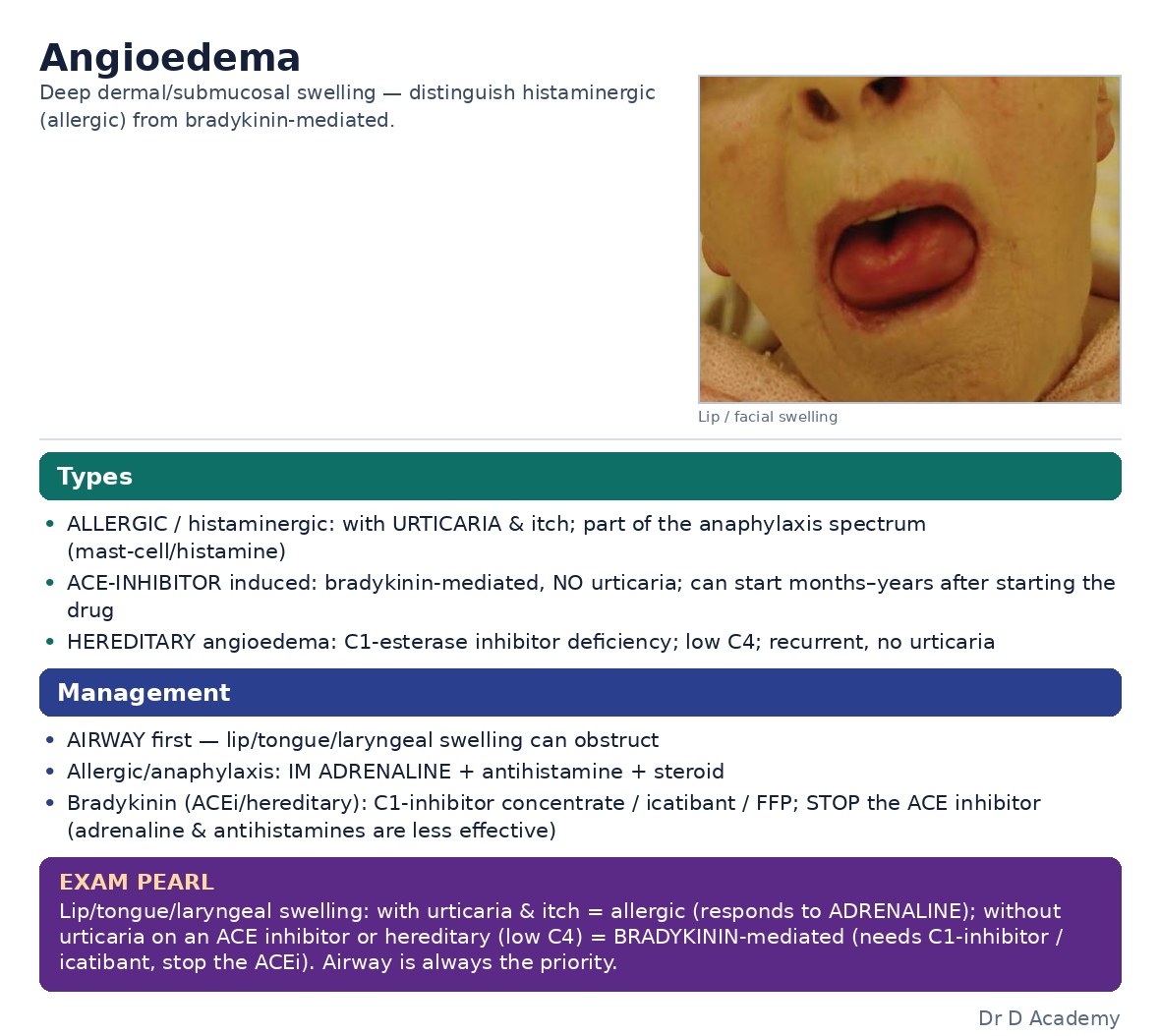
A rare cyclical disorder of recurrent angioedema and urticaria with fever, weight gain (from fluid retention), marked blood EOSINOPHILIA and raised IgM, recurring every 3–4 weeks. Despite striking eosinophil counts it is BENIGN and, unlike hypereosinophilic syndrome, does NOT cause end-organ eosinophilic damage. It is corticosteroid-responsive; the main task is to distinguish it from harmful hypereosinophilic syndromes.
Figures & algorithms
Red flags
- Cardiac, neurological or GI dysfunction (suggests organ-damaging hypereosinophilic syndrome, not Gleich)
- Persistent rather than cyclical eosinophilia
- Weight loss or constitutional decline (reconsider malignancy)
Assessment
Differential diagnosis
- Hypereosinophilic syndrome with organ involvement (cardiac, neurological, GI damage — needs urgent treatment)
- Systemic mastocytosis, drug reaction with eosinophilia (DRESS), parasitic infection
- C1-INH deficiency and other angioedemas (no eosinophilia)
Investigations
- FBC with differential showing CYCLICAL eosinophilia peaking with attacks; serial counts reveal the cycle
- Raised serum IgM; weight charting documents the cyclical fluid retention
- Screen for end-organ damage (troponin/echo, ECG, GI and neuro assessment) to exclude harmful hypereosinophilic syndrome; exclude parasites/clonal disease
Management
- Recognise the cyclical pattern: angioedema, urticaria, fever and weight gain recurring roughly every month with eosinophilia.
- Exclude organ-damaging causes of eosinophilia (cardiac, neurological, GI) and clonal/parasitic disease before labelling it benign.
- Treat symptomatic attacks with corticosteroids, which rapidly reduce swelling and eosinophilia.
- Antihistamines help the urticarial/pruritic component.
- For frequent disabling attacks, specialists may use steroid-sparing agents to limit long-term steroid exposure.
- Reassure about the benign prognosis and arrange immunology/haematology follow-up to monitor for any evolution.
Drugs & doses
Systemic corticosteroid for attacks (rapidly effective; confirm against local policy)
H1 antihistamine for urticaria/pruritus (confirm against local policy)
Steroid-sparing agents for frequent attacks — specialist-directed (confirm against local policy)
Disposition
Outpatient immunology/haematology follow-up with serial counts and organ surveillance; treat attacks with corticosteroids.
Complications & pitfalls
- Recurrent disabling attacks
- Corticosteroid side effects from repeated courses
- Misdiagnosis as harmful hypereosinophilic syndrome
Exam pearls
- Cyclical angioedema + fever + weight gain + eosinophilia ≈ Gleich syndrome — benign and steroid-responsive.
- The crucial step is excluding end-organ eosinophilic damage (which defines the dangerous HES).
- Serial eosinophil counts reveal the monthly cycle that clinches the diagnosis.
Educational — confirm all doses against local policy.
Disclaimer: Educational decision support for qualified clinicians and students — not a substitute for clinical judgement, local protocols or a full drug reference. Confirm every dose and contraindication against your formulary before prescribing.