Idiopathic non-histaminergic angioedema (normal C1-INH)
Angioedema · Allergy / Immunology
Physician-written · Verified by three sets of doctors · Reviewed November 2026
Bedside summary
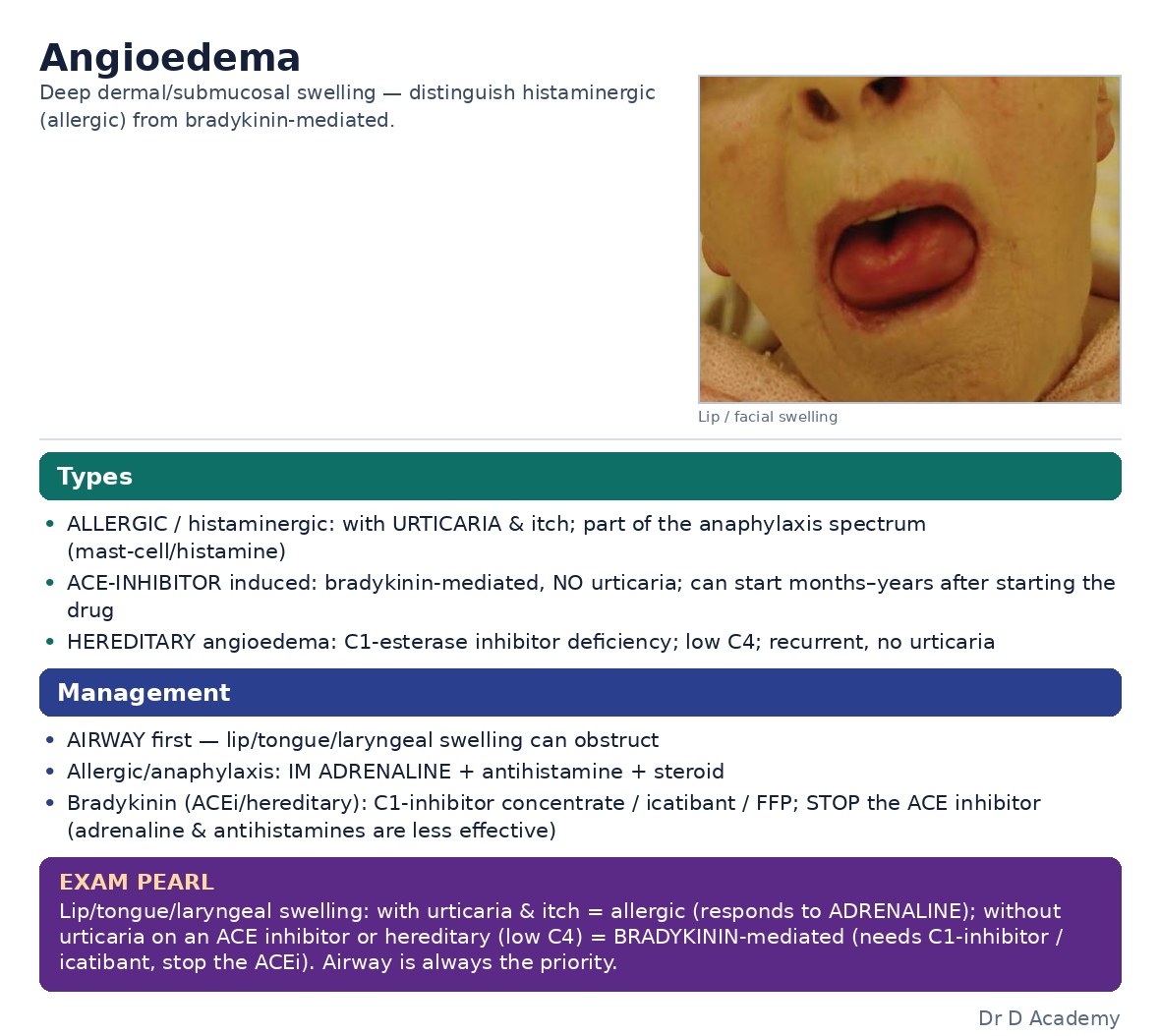
Recurrent angioedema WITHOUT weals that does NOT respond to antihistamines and is NOT explained by C1-inhibitor deficiency, ACE inhibitors or an allergic trigger (a diagnosis of exclusion). It is thought to be bradykinin-mediated or of unknown mechanism; attacks can threaten the airway. Treat an acute severe attack as for a bradykinin-mediated angioedema, not as anaphylaxis, while always protecting the airway first.
Figures & algorithms
Red flags
- Tongue, floor-of-mouth or laryngeal swelling / stridor / voice change
- Rapidly progressive or recurrent airway-threatening attacks
- No response to adrenaline, steroids and antihistamines (suggests bradykinin mechanism)
- Concurrent ACE inhibitor use
Assessment
Differential diagnosis
- Hereditary and acquired C1-INH deficiency (check C4, C1-INH level & function)
- ACE-inhibitor / ARB / DPP-4 inhibitor-induced angioedema (drug history)
- Histaminergic (allergic / idiopathic histaminergic) angioedema — responds to antihistamines/steroids
- FXII-related and other hereditary angioedema with normal C1-INH
Investigations
- C4, C1-INH level AND function (normal here; low in C1-INH deficiency) — repeat if initially equivocal
- Tryptase if an allergic/mast-cell process is possible; review all medicines (ACEi, ARB, gliptins, NSAIDs, oestrogens)
- Consider genetic testing for hereditary angioedema with normal C1-INH when there is a family history
Management
- AIRWAY FIRST: assess for tongue/laryngeal involvement, stridor or voice change; get early anaesthetic/ENT support and prepare for a difficult airway.
- Give adrenaline AND treat as anaphylaxis if there is any doubt that the reaction is allergic — do not withhold adrenaline in a deteriorating airway.
- If this is confirmed bradykinin-mediated/non-histaminergic and the attack is severe, antihistamines, steroids and adrenaline are typically ineffective — consider targeted bradykinin therapy (e.g. icatibant) or C1-INH concentrate, as used in hereditary angioedema (specialist/off-label).
- STOP any ACE inhibitor, ARB, gliptin or oestrogen-containing drug permanently.
- For prophylaxis of recurrent attacks, a trial of high-dose antihistamine first helps confirm the non-histaminergic phenotype; if ineffective, specialist options include tranexamic acid or androgens (as in HAE).
- Refer to immunology for definitive diagnosis, an attack plan and consideration of on-demand/prophylactic therapy.
Drugs & doses
Adrenaline IM if any possibility of anaphylaxis or airway compromise (do not withhold; confirm against local policy)
Icatibant (bradykinin B2-receptor antagonist) or C1-INH concentrate for severe bradykinin-mediated attacks — specialist/off-label in this condition (confirm against local policy)
Trial of high-dose non-sedating H1 antihistamine to confirm/exclude a histaminergic component
Tranexamic acid as a prophylactic option in some patients (specialist; confirm against local policy)
Withdraw ACE inhibitors, ARBs, DPP-4 inhibitors and oestrogens
Disposition
Admit/observe severe airway attacks; refer all cases to immunology for diagnosis, an individualised attack plan and prophylaxis.
Complications & pitfalls
- Airway obstruction and asphyxiation
- Recurrent attacks with impaired quality of life
- Mislabelling as refractory anaphylaxis or allergic angioedema
Exam pearls
- Angioedema without weals that ignores antihistamines and steroids is bradykinin-mediated until proven otherwise.
- Never withhold adrenaline if the airway is threatened and the mechanism is uncertain.
- Stop ACE inhibitors permanently and refer to immunology for definitive phenotyping.
Educational — confirm all doses against local policy.
Disclaimer: Educational decision support for qualified clinicians and students — not a substitute for clinical judgement, local protocols or a full drug reference. Confirm every dose and contraindication against your formulary before prescribing.