Suspected anaphylaxis — serial mast cell tryptase & allergy referral pathway
Confirming anaphylaxis and arranging specialist follow-up · Allergy / Immunology
Physician-written · Verified by three sets of doctors · Reviewed November 2026
Bedside summary
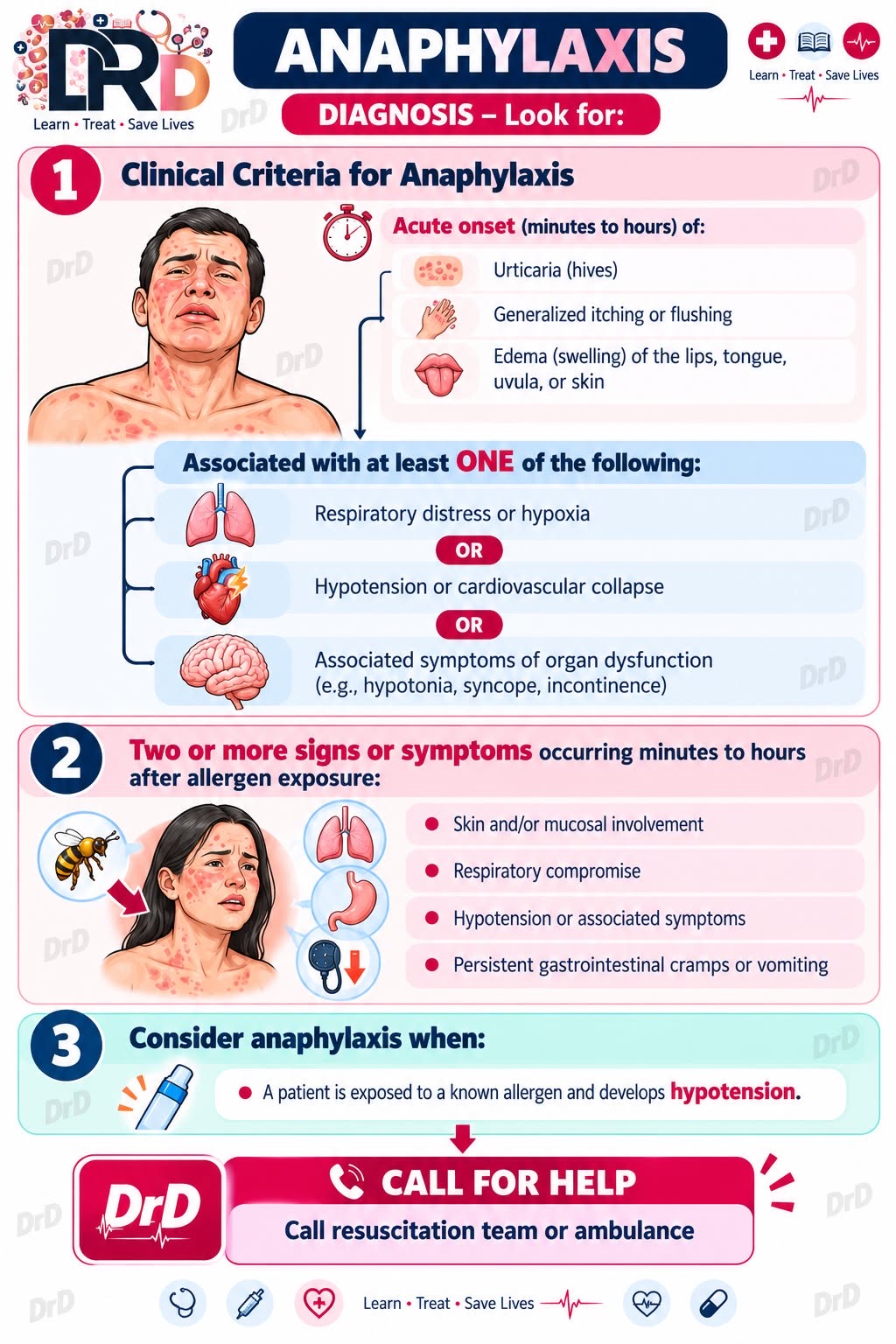
Serial mast cell tryptase samples support the retrospective diagnosis of anaphylaxis and help identify mastocytosis. Every patient treated for anaphylaxis requires correctly timed tryptase sampling and referral to a specialist allergy service to identify the trigger and reduce recurrence.
Figures & algorithms
Red flags
- Persistently elevated baseline tryptase (>11.4 mcg/L) suggesting mastocytosis
- Recurrent unexplained reactions
- Hypotension or airway involvement during the index event
- Reaction to a drug required for future treatment
- Failure of the acute rise to settle on serial sampling
Assessment
Differential diagnosis
- True IgE-mediated anaphylaxis
- Non-immune mast-cell activation (direct releasers, e.g. opioids, vancomycin)
- Scombroid (histamine) poisoning
- Systemic mastocytosis / mast cell activation syndrome
- Vasovagal syncope or panic attack mimicking a reaction
Investigations
- Mast cell tryptase: sample 1 as soon as feasible after resuscitation (do not delay treatment)
- Mast cell tryptase: sample 2 at 1-2 h after symptom onset (peak)
- Mast cell tryptase: sample 3 at >24 h or at follow-up as baseline
- Record exact times of each sample and of the reaction
- Specific IgE / skin testing arranged at allergy clinic (not acutely)
Management
- Treat the acute reaction first — sampling never delays adrenaline
- Take the first tryptase once the patient is stable after initial resuscitation
- Take the second sample at 1-2 h from onset to capture the peak
- Arrange a convalescent/baseline sample at >24 h or in clinic
- Document the suspected trigger, timing, route, and co-factors (exercise, alcohol, NSAIDs)
- Provide two adrenaline auto-injectors with training and a written emergency plan
- Refer all patients to a specialist allergy service as per Resuscitation Council UK guidance
- Advise strict avoidance of the suspected trigger until formally assessed
Drugs & doses
Adrenaline auto-injector — 300 mcg IM (adult), two devices supplied on discharge
Cetirizine — 10 mg orally for residual cutaneous symptoms
Prednisolone — 40 mg orally once daily for up to 3 days if ongoing urticaria/asthma
Adrenaline IM — 500 mcg (0.5 mL 1:1000) available for any recurrence during observation
Disposition
Discharge after the appropriate observation period with auto-injectors, an action plan, and a mandatory specialist allergy referral.
Complications & pitfalls
- Missed diagnosis and recurrent anaphylaxis without an action plan
- Undiagnosed mastocytosis
- Continued exposure to an unidentified trigger
- Patient anxiety and auto-injector misuse
- Biphasic reaction during the observation window
Exam pearls
- A rise in acute tryptase of >20% above baseline plus 2 mcg/L strongly supports mast-cell activation
- Normal tryptase does not exclude anaphylaxis, especially food-triggered reactions
- Record precise sample and reaction times — the result is uninterpretable without them
- Persistently raised baseline tryptase warrants screening for clonal mast cell disease
Disclaimer: Educational decision support for qualified clinicians and students — not a substitute for clinical judgement, local protocols or a full drug reference. Confirm every dose and contraindication against your formulary before prescribing.