Systemic mastocytosis with anaphylaxis
Mast cell · Allergy / Immunology
Physician-written · Verified by three sets of doctors · Reviewed November 2026
Bedside summary
Clonal mast cell proliferation predisposing to recurrent, often severe anaphylaxis (spontaneous or triggered), frequently with hypotension-predominant presentations and a persistently elevated baseline tryptase.
Figures & algorithms
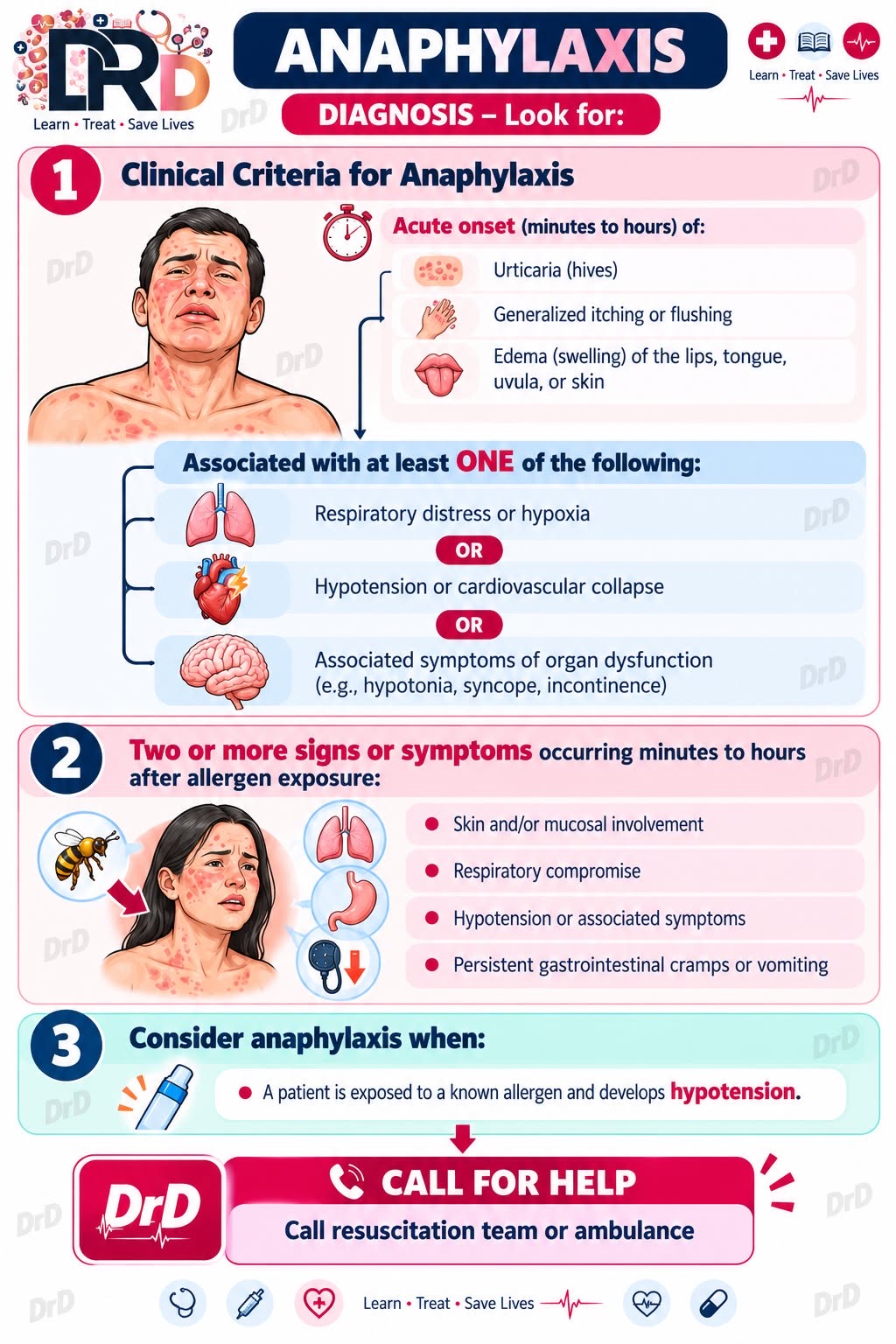
Red flags
- Recurrent severe hypotensive anaphylaxis
- Very high baseline tryptase
- Poor response to standard treatment
- Syncope with triggers
Assessment
Differential diagnosis
- Idiopathic anaphylaxis
- Mast cell activation syndrome
- Carcinoid syndrome
- Phaeochromocytoma
- Hereditary alpha-tryptasaemia
Investigations
- Serial tryptase (acute rise over baseline) and elevated baseline tryptase
- Assess for triggers (hymenoptera stings, drugs, physical)
- Later: bone marrow biopsy, KIT D816V mutation, skin examination for urticaria pigmentosa
- Standard anaphylaxis monitoring
Management
- Treat acute episodes as anaphylaxis: IM adrenaline, oxygen, IV fluids
- Anticipate severe hypotension-predominant reactions and resuscitate aggressively
- Give H1 and H2 antihistamines and corticosteroids as adjuncts
- Identify and remove triggers (drugs, venom, physical factors)
- Prescribe adrenaline auto-injectors and a management plan
- Refer to a specialist mastocytosis/immunology service for long-term therapy (e.g. antihistamines, mast cell stabilisers)
Drugs & doses
IM adrenaline (repeat as needed; infusion for refractory shock)
H1 and H2 antihistamines
Corticosteroids
IV fluids (large volumes often needed)
Long-term: mast cell stabilisers and antihistamines per specialist
Disposition
Admit after severe episodes; specialist mastocytosis/immunology referral; auto-injectors on discharge.
Complications & pitfalls
- Recurrent life-threatening anaphylaxis
- Cardiovascular collapse
- Organ involvement in advanced systemic mastocytosis
Exam pearls
- Suspect underlying mast cell disease in recurrent, severe or hypotension-dominant anaphylaxis with a raised baseline tryptase
- These patients need aggressive fluid resuscitation and often several adrenaline doses
- Venom immunotherapy is important as hymenoptera stings can be lethal in mastocytosis
Disclaimer: Educational decision support for qualified clinicians and students — not a substitute for clinical judgement, local protocols or a full drug reference. Confirm every dose and contraindication against your formulary before prescribing.