Anaesthesia for major burns surgery (excision and grafting)
Burns surgery · Anaesthesia & Perioperative
Physician-written · Verified by three sets of doctors · Reviewed November 2026
Bedside summary
Excision and grafting of major burns is characterised by large, rapid blood loss, major heat loss from exposed tissue, and the altered pharmacology of the burned patient. Repeated procedures and a potentially difficult airway from facial/inhalational injury add complexity.
Figures & algorithms
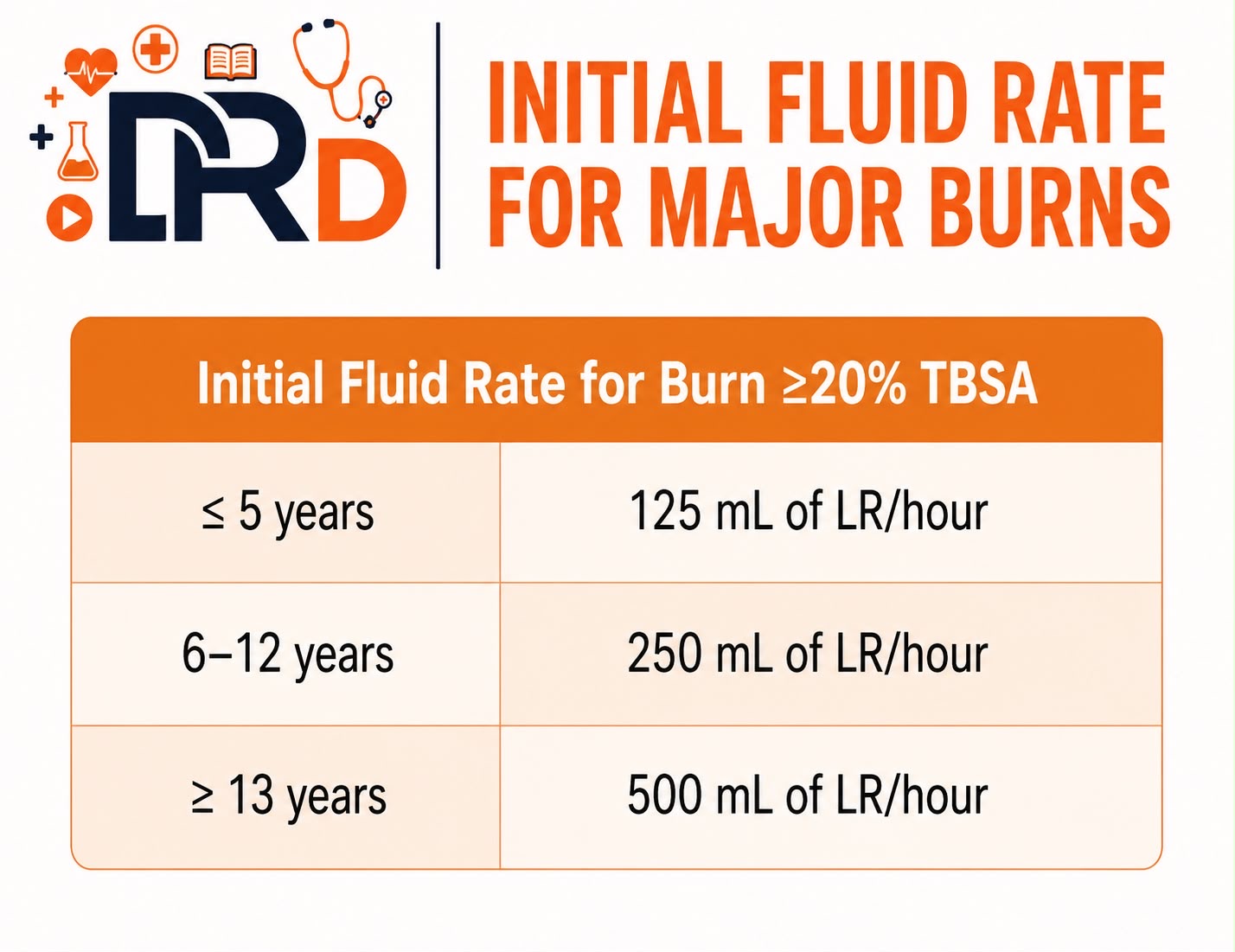
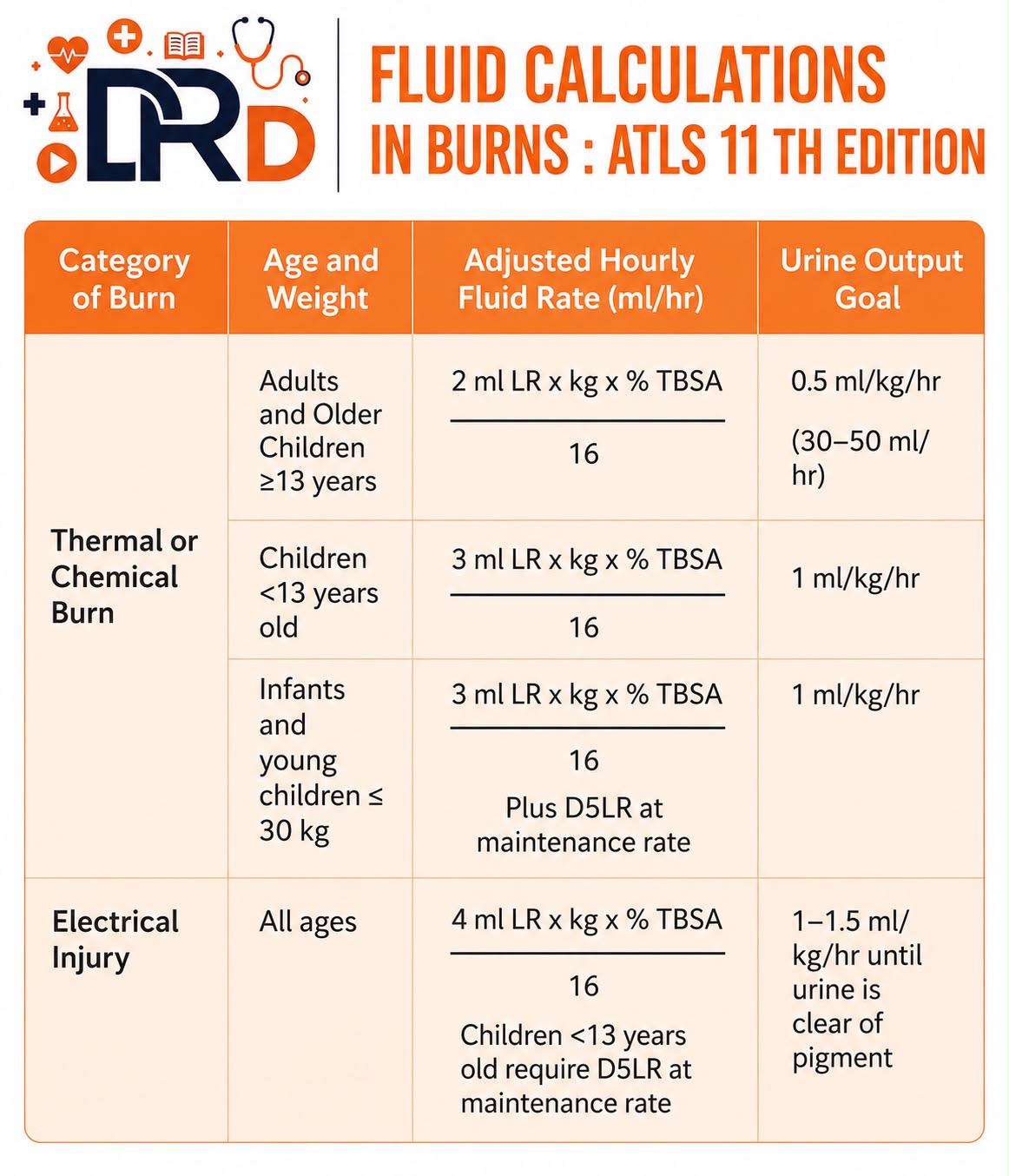
Assessment
Investigations
- Burn size (percentage TBSA) and depth, inhalational injury assessment
- FBC, coagulation, crossmatch, electrolytes, ABG, carboxyhaemoglobin
- Airway assessment (oedema, inhalational injury)
Management
- Assess and secure the airway early if inhalational injury or facial oedema threatens it
- Anticipate major, rapid blood loss during excision: cross-matched blood, cell salvage where applicable, large-bore access
- Aggressively prevent heat loss: warm theatre, fluids, forced-air warming, and limit exposure time
- Avoid suxamethonium after about 24-48 hours post-burn (risk of hyperkalaemic arrest from upregulated receptors) and expect resistance to non-depolarising relaxants
- Provide generous analgesia (high opioid tolerance is common) and plan multimodal regimens
- Transfuse to targets and maintain perfusion during brisk losses
- Recover in the burns unit/ICU with analgesia and temperature management
Drugs & doses
Avoid suxamethonium >24-48 h post-burn (hyperkalaemic arrest risk)
Expect resistance to non-depolarising relaxants (higher doses)
Generous opioid analgesia (tolerance common); ketamine adjunct
Crossmatched blood and tranexamic acid; aggressive warming
Disposition
Burns unit/ICU; temperature and analgesia management.
Expect brisk blood loss and heat loss, avoid suxamethonium after the first 24-48 hours, and anticipate relaxant resistance and high analgesic requirements.
Disclaimer: Educational decision support for qualified clinicians and students — not a substitute for clinical judgement, local protocols or a full drug reference. Confirm every dose and contraindication against your formulary before prescribing.