Mast cell tryptase sampling and anaphylaxis follow-up
Tryptase · Anaesthesia & Perioperative
Physician-written · Verified by three sets of doctors · Reviewed November 2026
Bedside summary
Confirming and investigating a suspected perioperative anaphylaxis relies on correctly timed mast cell tryptase samples and structured referral, so the culprit agent is identified and avoided in future.
Figures & algorithms
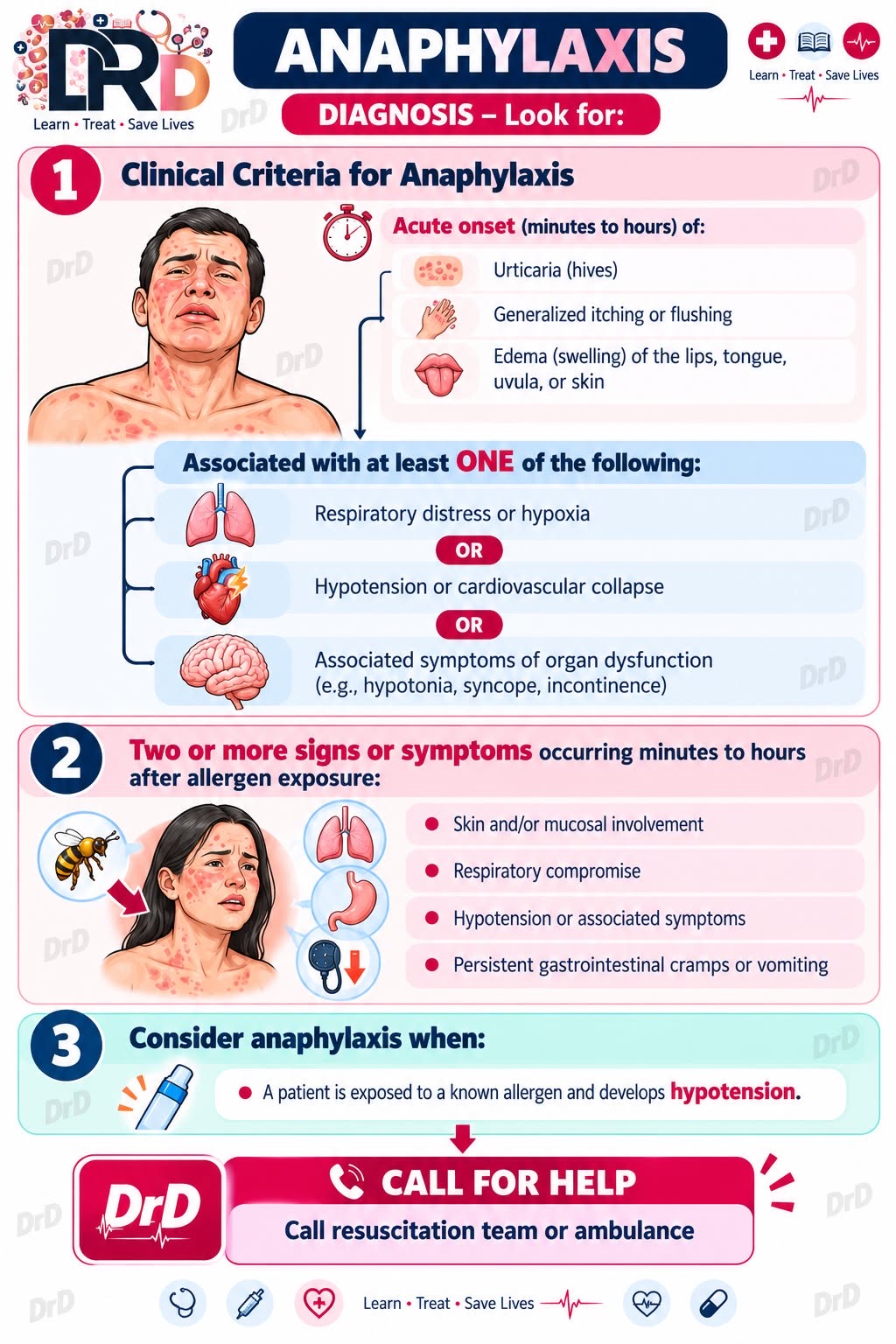
Assessment
Investigations
- Immediate (ideally within 30-60 min) tryptase
- Second sample at 1-2 hours (near the peak)
- Baseline sample at or after 24 hours
- Document all drugs, timings and the reaction grade
- Photograph any rash and record latex/chlorhexidine exposure
Management
- Take the first tryptase as soon as resuscitation allows without interrupting care
- Take the second sample at the estimated peak (1-2 hours)
- Take a baseline sample at least 24 hours later or at clinic
- Record an accurate anaesthetic timeline of every drug and its timing
- Give the patient written information about the reaction
- Refer to a specialist allergy clinic for skin and specific IgE testing
Drugs & doses
—
Disposition
Discharge with allergy-clinic referral and documentation.
A dynamic rise and fall in tryptase supports mast cell activation; a normal tryptase does not exclude anaphylaxis — the clinical picture and allergy testing decide (NAP6).
Disclaimer: Educational decision support for qualified clinicians and students — not a substitute for clinical judgement, local protocols or a full drug reference. Confirm every dose and contraindication against your formulary before prescribing.